
Key takeaways
-
Powerful natural protection: Melanin (eumelanin) acts as a shield against UV rays, providing a natural SPF of around 13, but this does not replace sun protection.
-
The downside: On dark skin, the slightest inflammation (pimple, injury) stimulates an overproduction of melanin, creating stubborn spots (hyperpigmentation).
-
Balance is key: We should not try to eliminate melanin, but regulate its production with gentle and moisturizing active ingredients (K-Beauty) rather than stripping products.
-
The ideal routine: Cleanse without irritating, treat with a targeted brightening serum and seal in moisture.
Melanin is often referred to as the natural pigment responsible for skin color. However, for Black , mixed-race , and olive skin tones, it plays a much more complex role. It acts as a true biological shield , but is also the primary cause of our major aesthetic concerns: blemishes and uneven skin tone.
Understanding how it works is the first step to achieving healthy skin and correcting imperfections . Contrary to popular belief, having a lot of melanin doesn't make skin invincible . On the contrary, skin rich in melanin is sensitive and reacts strongly to the slightest aggression.
Kanu Skincare, as a brand specializing in skincare products for rich and diverse skin tones, understands the importance of melanin in its product formulations. Discover all the roles of melanin , its benefits , and Kanu Skincare's approach to creating products specifically for melanin-rich skin.
What is melanin?
Melanin is a biological pigment produced by melanocytes , cells found in the hair follicles of the epidermis, the outermost layer of skin. Present in many living organisms, including humans, it is responsible for the coloration of skin, hair, and eyes .
There are two main types of melanin, but their proportion varies considerably depending on skin tone.
-
Eumelanin: This is the brown-black pigment, predominant in dark skin (phototypes IV to VI). It is very effective at absorbing UV rays and blocking free radicals.
-
Pheomelanin: This is the yellow-red pigment, predominant in fair skin. It offers very little protection against UV rays.
In dark skin, melanocytes are no more numerous than in Caucasian skin. The difference lies in the activity of these cells: they produce larger, denser melanosomes with a higher concentration of eumelanin . These melanosomes extend into the upper layers of the epidermis, which explains why it is essential to know your skin type to tailor your skincare routine.
The paradox of melanin: protection vs. hyperpigmentation
This is where the complexity of skincare for dark skin comes into play. Your melanin is both your best friend and your worst enemy if it's not managed properly.
A natural barrier against the sun
The high concentration of eumelanin offers natural protection equivalent to an SPF of approximately 13. This helps to better resist premature aging (wrinkles) and UV-related skin cancers. However, this protection is not absolute. Sunburn on dark skin is entirely possible and can cause deep damage invisible to the naked eye.
It is important to protect yourself and your skin from UV rays. To do this, don't hesitate to wear a hat, sunglasses, and protective clothing.
Use a sunscreen with an SPF of at least 30 (Sun Protection Factor) and above all, avoid prolonged exposure during the hottest hours of the day, even if you are addicted to tanning!
Kanu Skincare takes advantage of this property by incorporating ingredients that support the protective function of melanin into its formulations.
Important note: The presence of melanin does not exempt you from sun protection. Applying sunscreen for dark skin remains essential to prevent spots from darkening further.
Pigmentation surge
The downside of this protection is reactivity. The melanin in dark skin is "unstable" when faced with inflammation. As soon as there is an attack (acne pimple, insect bite, cut, harsh peel), the melanocytes go into overdrive and overproduce pigment to protect the area.
This mechanism is what transforms simple inflammation into a persistent brown spot. That's why treating acne and excess sebum should always be done gently to avoid worsening hyperpigmentation .
Resistance to the signs of skin aging
Melanin also contributes to the skin's natural resistance to signs of premature aging , such as wrinkles and fine lines. With its protective properties, melanin helps prevent oxidative damage caused by free radicals, thus promoting a more youthful and radiant appearance.
Thus, skin rich in melanin benefits from a natural defense against external aggressions such as pollution and UV rays, factors that accelerate the skin aging process.
How to regulate melanin with a suitable Korean routine
Melanin plays a central role in regulating skin pigmentation . Black, tanned, and mixed-race skin, with a higher concentration of melanin, is often more prone to pigmentation problems, such as hyperpigmentation (dark spots) or hypopigmentation (loss of color), often due to inflammation, scarring, or infection of the epidermis.
1. Clean without damaging
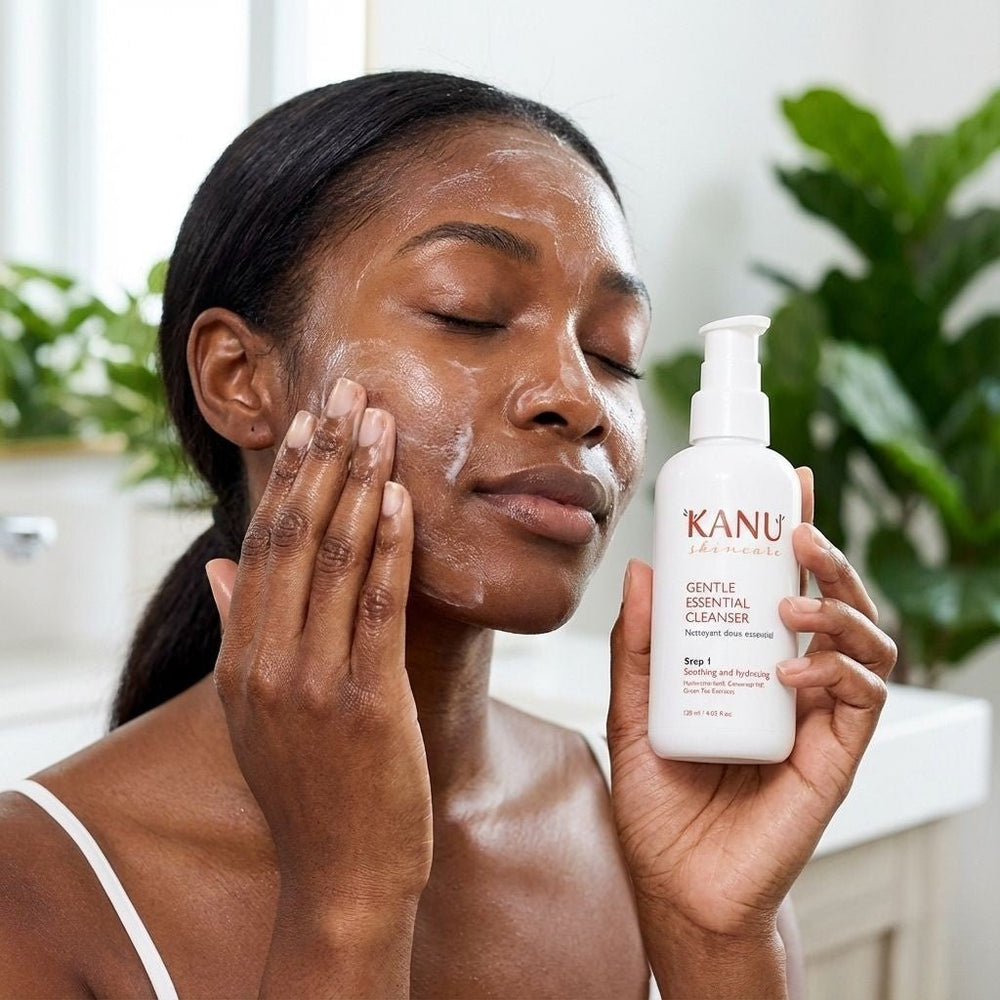
Using harsh soaps disrupts the skin's pH balance . A damaged skin barrier sends a warning signal to melanocytes, which then produce pigment as a defense. To prevent this from happening from the start, choose our gentle essential cleanser . It removes impurities without causing the inflammation that leads to dark spots.
2. Treat with an inhibitor serum
This is the most technical step. To correct existing spots and prevent new ones, you need active ingredients that tell melanocytes to "calm down." Our essential brightening serum contains ingredients that specifically target tyrosinase (the enzyme that triggers melanin), allowing it to lighten spots without discoloring the surrounding healthy skin. It's an effective solution for melasma .
3. Moisturize to protect
A hydrated cell is a cell that functions well. Daily essential hydration strengthens the skin barrier. The stronger your skin, the less it needs to produce "emergency" melanin in response to external aggressors (wind, pollution).
Factors that disrupt your melanin
Beyond cosmetics, your lifestyle directly influences the radiance of your complexion.
-
Hormones: Pregnancy or the pill can trigger the "pregnancy mask" via hormonal stimulation of melanin.
-
Oxidative stress: Pollution and tobacco oxidize melanin, making the complexion grey.
-
Physical trauma: Popping pimples is the number one cause of blemishes. If you suffer from imperfections, choose a facial cleanser specifically formulated for acne rather than picking at your skin.
Some people attempt aggressive procedures such as chemical peels . While possible, this must be done with extreme caution, as a peel that is too harsh can burn the skin and cause permanent post-inflammatory hyperpigmentation.


