
Key takeaways
-
Post-inflammatory hyperpigmentation is a natural reaction of black skin that produces too much melanin after a pimple.
-
Patience and gentleness are your best allies: stripping the skin worsens spots.
-
The anti-spot serum is the central treatment to block pigment overproduction.
-
Sun protection is essential to prevent existing spots from darkening.
Quick test: Is your routine suitable for your spots?
| If you have... | Your priority is... | Recommended product |
| Active and inflamed pimples | Soothe and purify without stripping | Gentle Essential Cleanser |
| Persistent dark spots | Even out and regulate melanin | Essential Brightening Serum |
| Skin that shines but feels tight | Seal in moisture and protect | Essential Daily Moisturizer |
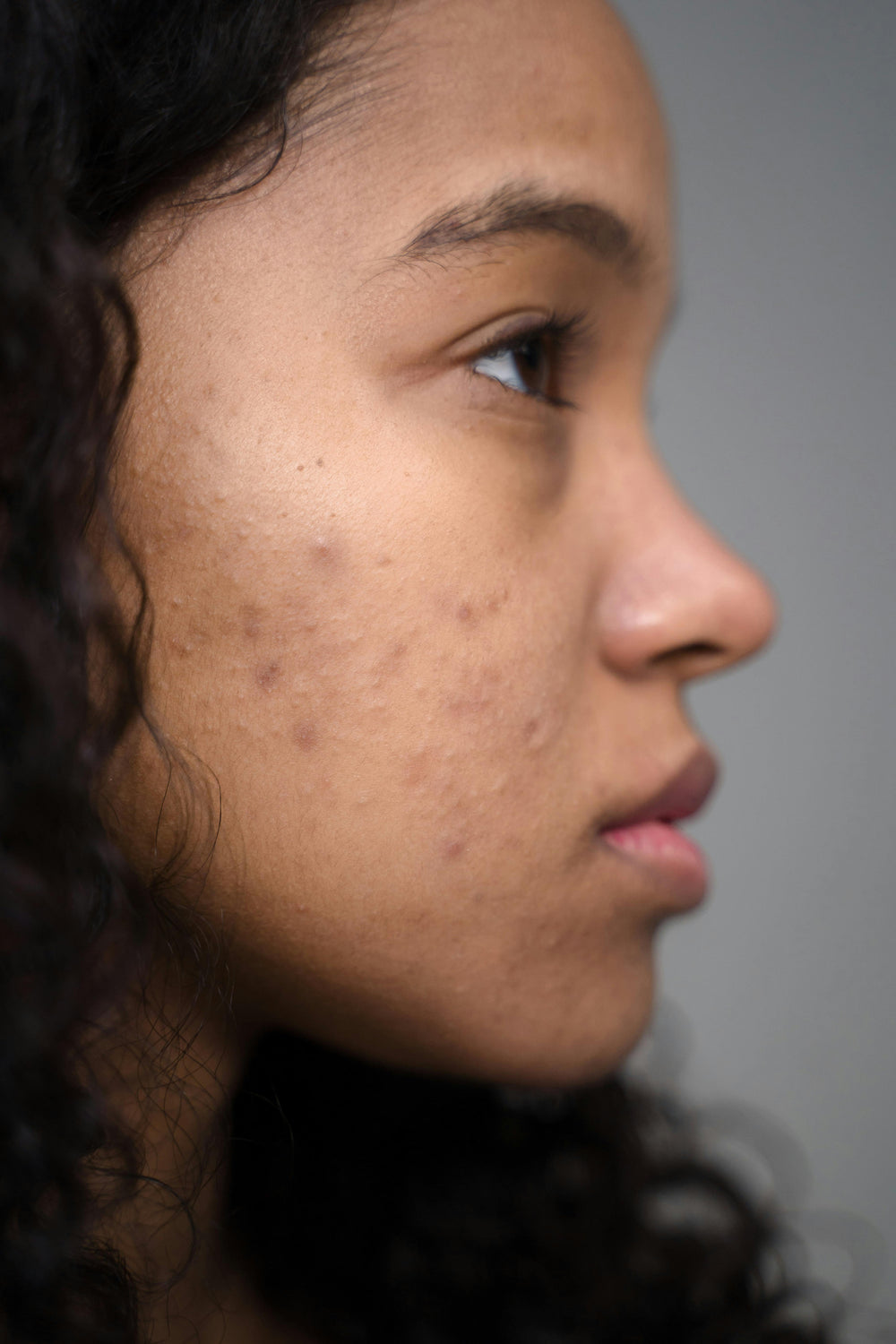
The appearance of dark spots after an acne breakout is one of the main concerns for black and mixed-race skin. This phenomenon, called post-inflammatory hyperpigmentation, turns every small imperfection into a dark mark that can take months to disappear. Contrary to popular belief, it is not necessary to use abrasive products to regain an even complexion.
By relying on the principles of Korean skincare, known for its gentle and multi-layered approach, it is possible to treat these imperfections while respecting the sensitivity of melanated skin.
Understanding why black skin scars more easily
Black skin has highly reactive melanocytes (the cells that produce color). As soon as an aggression occurs, such as an acne pimple, these cells activate to protect the area by producing a surplus of melanin. This is what creates the spot.
The trap is wanting to "strip" this spot with products that are too strong. Further aggression (grainy scrub, overly concentrated acids) will only restart the inflammatory process, thus creating new marks. To understand this mechanism, it is useful to know your skin type in order to provide the most accurate response.
The three-step strategy for a flawless complexion
To achieve visible results on skin imperfections, a consistent routine is necessary. The secret lies in using synergistic care.
1. Cleansing: the basis of clarity
It all starts with an effective but silky removal of impurities. A face cleanser for acne on black skin should never leave the skin feeling "squeaky clean".
The gentle essential cleanser frees pores from excess sebum without altering the skin barrier, thus avoiding inflammation that leads to spots.
2. Targeted treatment: serum as a central solution
The real engine of your transformation is the essential brightening serum. Unlike dangerous bleaching products, this treatment uses active ingredients that regulate melanin production at the source. It helps fade dark marks while restoring overall radiance to the face. This is the essential step to treat hyperpigmentation without altering the natural skin tone.
3. Hydration and protection: sealing in benefits
Dehydrated skin defends itself poorly. Applying the essential daily moisturizer ensures skin suppleness. Moreover, it is vital to protect these areas from the sun. Even on dark skin, UV rays set the spots. To learn more, consult our article on sunscreen for black skin.
Comparative table of lightening methods
| Method | Action on the skin | Risks | KANU Recommendation |
| Strong chemical depigmenting agents | Destroy melanocytes | Burns, irreversible white spots | To be totally avoided |
| Frequent mechanical scrubs | Tear off surface cells | Inflammation and pigment rebound | Avoid on pimples |
| Korean Skincare (KANU Serum) | Gently regulates melanin | No risk of depigmentation | Ideal and lasting solution |
Why choose a complete kit instead of isolated products?
Treating acne spots with a single product is often disappointing because not all causes of the imperfection are treated. Using the Kanu essential kit ensures that each step prepares the skin for the next. The cleanser prepares the ground, the serum treats deeply, and the cream protects the whole.
This global approach helps reduce excess sebum while correcting pigmentary marks.
Mistakes to absolutely avoid
-
Popping pimples: This guarantees a deep dark spot and sometimes a raised scar.
-
Using pure alcohol: This dries out the skin, which reacts by producing even more oil, thus promoting excess sebum on black skin.
-
Neglecting hydration: Oily skin also needs water to heal properly.


